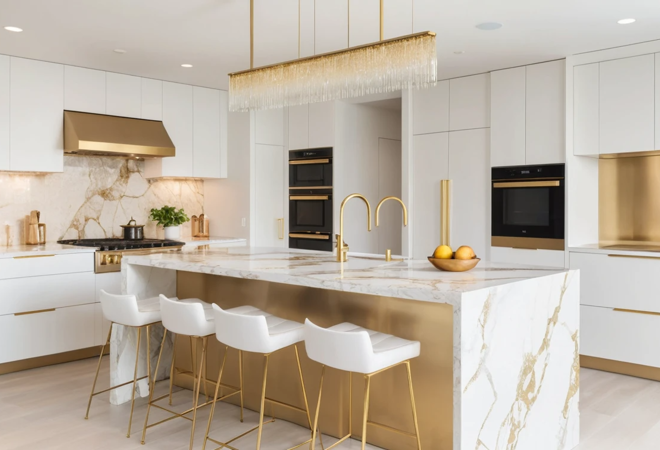

How Are Quartz Countertops Made – Powerful Guide That Inspires
How are quartz countertops made? Discover the full process, materials, and benefits in this easy, engaging guide for homeowners.
Quartz countertops are made by combining natural quartz crystals with resins, pigments, and polymers, then compressing and curing the mixture into durable slabs. This engineered process creates strong, non-porous surfaces ideal for kitchens and bathrooms.
How Are Quartz Countertops Made 🏗️
Ever wondered why quartz countertops look so perfect and consistent compared to natural stone? That smooth, polished finish isn’t just luck—it’s science and smart engineering.
Quartz countertops are engineered stone surfaces, not mined slabs like granite. They are made by mixing crushed natural quartz with resins and pigments. This blend is then compressed, shaped, and cured to form a hard, durable slab. The result is a beautiful, low-maintenance surface that homeowners love.
What Is Quartz Made Of? 🔬
Quartz countertops are not 100% natural stone. They are a blend of natural and synthetic materials. This is what makes them so versatile and reliable.
Typically, quartz countertops contain about 90–95% natural quartz crystals. The remaining portion includes resins, polymers, and pigments. These added materials help bind the quartz together and give it color and pattern.
This mix creates a surface that is stronger than many natural stones. It also allows manufacturers to design consistent patterns that mimic marble or granite.
Why Quartz Countertops Are Engineered 💡
Unlike granite, quartz is not cut directly from large slabs in nature. Instead, it is engineered in factories. This process gives manufacturers more control over quality and design.
Because it is engineered, quartz has fewer flaws. There are no cracks or weak spots like you might find in natural stone. This makes it a reliable option for busy kitchens.
It also means you can get a uniform look. If you want matching countertops across your home, quartz makes it easy.
Step-By-Step Quartz Countertop Manufacturing Process 🏭
The process of making quartz countertops involves several precise steps. Each step ensures strength, durability, and visual appeal.
Here’s a simplified overview:
- Mining and crushing quartz
- Mixing with resins and pigments
- Molding into slabs
- Compressing under pressure
- Curing with heat
- Polishing and finishing
Each stage plays a key role in creating the final product. Let’s break them down further.
Step 1: Mining Natural Quartz ⛏️
Quartz begins its journey in quarries. Large deposits of quartz are mined from the earth using heavy machinery.
Once extracted, the raw quartz is transported to processing facilities. It is then cleaned to remove dirt and impurities. This ensures a high-quality final product.
Quartz is one of the hardest minerals on Earth. That’s why it makes such a durable countertop material.
Step 2: Crushing And Sorting Quartz 🧱
After mining, the quartz is crushed into smaller pieces. These pieces can vary in size, depending on the desired look.
Manufacturers carefully sort the crushed quartz. Fine particles create smooth finishes, while larger pieces add texture.
This step allows for customization. Different sizes and blends create unique patterns and designs.
Key Quartz Particle Sizes
| Particle Type | Size Range | Effect On Surface |
| Fine Powder | Very Small | Smooth, uniform look |
| Medium Grains | Moderate | Balanced texture |
| Large Chips | Bigger Pieces | Bold, natural patterns |
Step 3: Mixing With Resins And Pigments 🎨
The crushed quartz is mixed with resins and pigments. This step is where the magic happens.
Resins act as a binder. They hold the quartz particles together. Pigments add color and create patterns.
Manufacturers can create a wide range of styles. From solid colors to marble-like veins, the options are endless.
Step 4: Molding Into Slabs 🧩
The mixture is poured into molds. These molds shape the material into slabs.
At this stage, the mixture is still soft. It needs to be compacted and hardened.
Different molds can create slabs of varying thickness and size. This allows flexibility for different uses.
Step 5: Compression And Vacuum Sealing ⚙️
The molded slabs are placed under intense pressure. This removes air pockets and compacts the material.
Vacuum sealing is also used during this step. It ensures there are no bubbles or weak spots.
This process makes quartz countertops extremely dense. It also improves durability and resistance to damage.
Step 6: Curing With Heat 🔥
After compression, the slabs are cured in special ovens. High heat hardens the resins and binds everything together.
This step transforms the material into a solid, durable surface. It also enhances strength and stability.
The curing process is what gives quartz its long-lasting performance.
Step 7: Polishing And Finishing ✨
Once cured, the slabs are polished. This creates the smooth, shiny finish you see in kitchens.
Different finishes are available, including:
- Polished – glossy and reflective
- Honed – matte and soft
- Textured – slightly rough
Edges are also shaped during this stage. This gives the countertop its final look.
Types Of Quartz Countertop Finishes 🎯
| Finish Type | Appearance | Best For |
| Polished | Shiny, sleek | Modern kitchens |
| Honed | Matte, subtle | Minimalist designs |
| Textured | Natural feel | Rustic spaces |
How Quartz Gets Its Color And Patterns 🌈
Quartz countertops can mimic natural stone or create bold modern designs. This is possible because of pigments and mixing techniques.
Manufacturers add pigments during the mixing stage. They can control color intensity and pattern distribution.
Some designs even replicate marble veins. Others create speckled or solid finishes.
This flexibility is a big reason why quartz is so popular.
Why Quartz Countertops Are So Durable 💪
Quartz is one of the hardest materials used in countertops. When combined with resins, it becomes even stronger.
Here’s why quartz stands out:
- Resistant to scratches
- Non-porous surface
- Stain-resistant
- Low maintenance
Unlike granite, quartz does not need sealing. This makes it easier to care for.
Quartz Vs Natural Stone Countertops ⚖️
Many homeowners compare quartz with granite or marble. Each has its pros and cons.
Quartz offers consistency and low maintenance. Natural stone offers unique patterns.
Quartz Vs Granite Comparison
| Feature | Quartz | Granite |
| Maintenance | Low | Medium |
| Porosity | Non-porous | Porous |
| Appearance | Consistent | Unique |
| Durability | High | High |
Environmental Impact Of Quartz Production 🌍
Quartz countertops are considered more eco-friendly than some natural stones. This is because they use leftover quartz materials.
However, the production process does use energy. Manufacturing involves heat and machinery.
Some brands focus on sustainability. They use recycled materials and reduce waste.
Common Misconceptions About Quartz ❗
Many people think quartz countertops are entirely natural. This is not true.
Quartz is engineered. It contains natural stone but also includes synthetic materials.
Another myth is that quartz cannot handle heat. While it is heat-resistant, extreme heat can still cause damage.
Where Quartz Countertops Are Used 🏡
Quartz is not just for kitchens. It is used in many areas of the home.
Common uses include:
- Kitchen countertops
- Bathroom vanities
- Backsplashes
- Wall panels
Its versatility makes it a favorite among designers.
How Quality Is Controlled During Manufacturing 🔍
Quality control is a key part of the process. Manufacturers test slabs for strength and consistency.
They check for defects like cracks or uneven surfaces. Only high-quality slabs are approved for sale.
This ensures that customers get reliable and durable countertops.
Benefits Of Choosing Quartz Countertops 🌟
Quartz offers several advantages over other materials.
Top benefits include:
- Easy maintenance
- Wide design options
- Strong and durable
- Hygienic surface
These features make quartz a smart choice for modern homes.
Final Thoughts On Quartz Countertop Manufacturing 🧠
Quartz countertops are a perfect blend of nature and technology. They combine natural quartz with advanced manufacturing techniques to create durable, beautiful surfaces.
From mining to polishing, every step is carefully controlled. This ensures consistency, strength, and style. If you want a countertop that looks great and lasts long, quartz is a solid choice.
FAQs
How Are Quartz Countertops Made Step By Step?
Quartz countertops are made by crushing quartz, mixing it with resins and pigments, and forming slabs. The slabs are compressed and cured with heat. Finally, they are polished and finished for use.
Are Quartz Countertops 100 Percent Natural?
No, quartz countertops are engineered. They contain natural quartz but also include resins and pigments. This combination improves durability and design flexibility.
Do Quartz Countertops Need Sealing?
Quartz countertops do not need sealing. They are non-porous, so they resist stains and bacteria. This makes them easy to maintain.
How Long Do Quartz Countertops Last?
Quartz countertops can last decades with proper care. They are highly durable and resistant to wear. Many homeowners keep them for 20–30 years or more.
Can Quartz Countertops Handle Heat From Pans?
Quartz is heat-resistant but not heat-proof. Sudden high heat can damage the surface. It is best to use trivets or pads for hot cookware.